
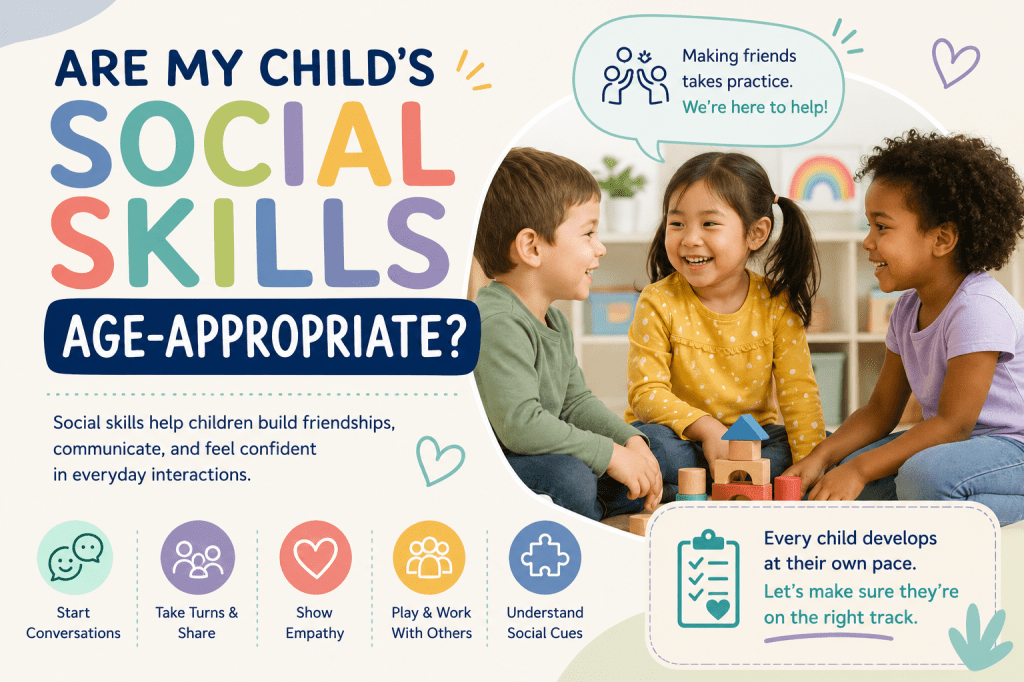
It’s common to wonder whether your child’s way of playing and interacting is “on track.” Social communication covers things like taking turns, sharing attention, starting and keeping a conversation going, and reading other people’s cues — and these develop gradually.
If your child seems to play differently from peers, has trouble joining in, or gets frustrated in social situations, an assessment can tell you what’s typical and what might benefit from support. Importantly, we take a neurodiversity-affirming view: the goal is helping your child connect and be understood in their way — not making them act like everyone else.
Frequently asked questions:
My child plays differently from other kids. Is that a problem?
Different isn’t automatically a problem. We help you understand what’s developmental, what’s just your child’s style, and what (if anything) would help.
Could this be autism?
Possibly, or possibly not. An assessment helps clarify, and we support communication regardless of diagnosis.
Can social communication be worked on?
Yes — through connection-based, affirming approaches, not scripted “social skills” drills.
Still Wondering If Your Child Could Benefit From Support?
Book a consultation with our team and get answers specific to your child’s needs.
 communicationconsultation.ca